The thesis
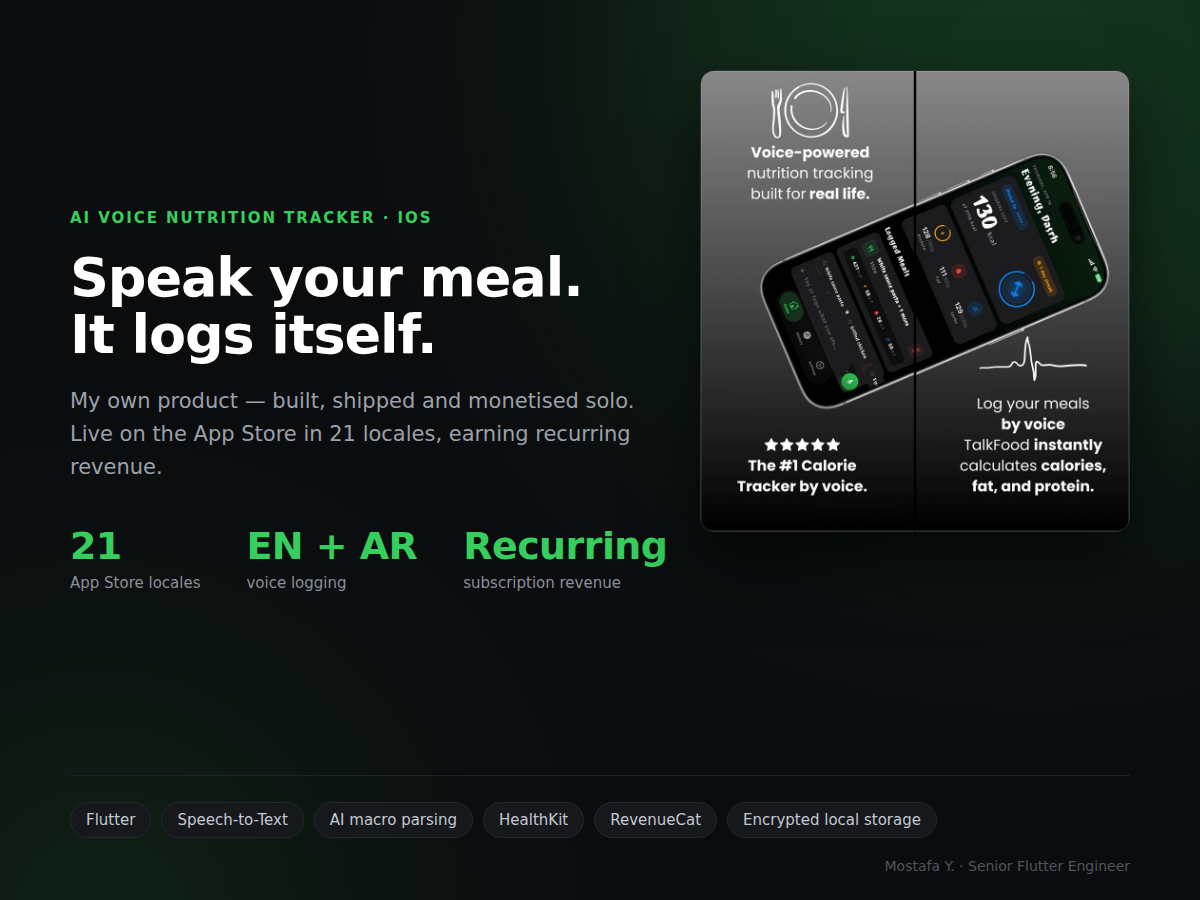
Tap the mic, say “chicken shawarma and a large orange juice”, and it logs. No searching a food database, no typing. That is the whole product and everything else serves it.
What it does
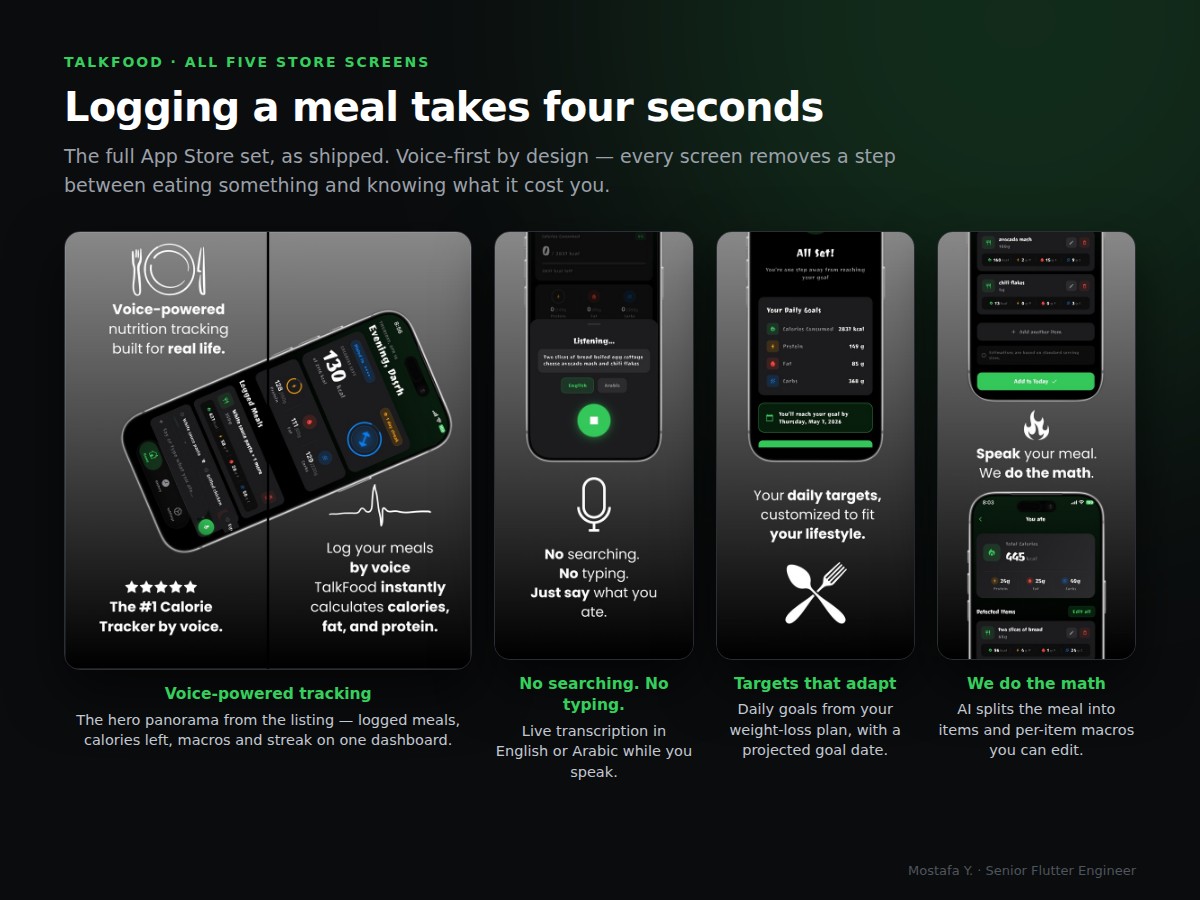
Voice meal logging with live transcription, so you watch the words appear as you speak. An AI layer turns that sentence into calories, protein, carbs and fat, handling multiple foods and quantities in one go. Daily targets are derived from a weight-loss goal flow: target weight and pace in, calorie and macro budget out. The home screen shows what is left rather than what you have eaten. History and insights chart progress over time. HealthKit sync writes nutrition into Apple Health and reads body metrics back. A Siri shortcut and an iOS home widget let you log without opening the app. Meals can be logged to past days, and day boundaries are detected correctly across timezones.
What I built
Solo, end to end.
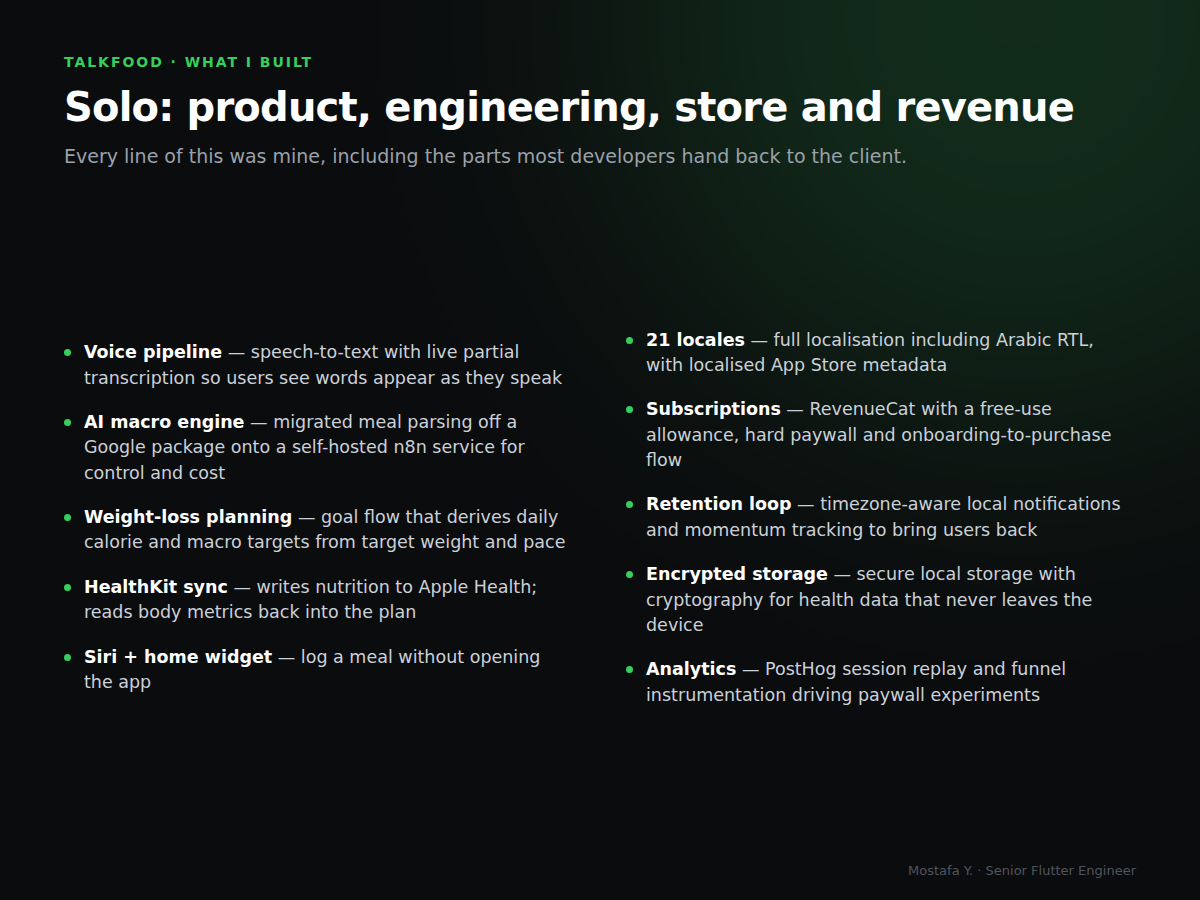
- The speech pipeline with partial-result streaming.
- Migrating the AI parsing service off a Google package onto a self-hosted n8n workflow, for cost and control.
- RevenueCat subscriptions with a free-use allowance, a hard paywall when it runs out, and an onboarding flow that converts straight to purchase.
- Timezone-aware local notifications for retention.
- Encrypted local storage, so health data never leaves the device.
- PostHog session replay driving paywall experiments.
- Localisation into 21 locales including Arabic RTL, with localised App Store metadata and screenshots for each.
- The store listing, ASO, pricing and the App Store submissions.
Why it matters
It earns recurring revenue. I mention that because it means I have lived with the parts of an app that come after launch: reviews, churn, subscription support, store rejections.